Buying a compound bow for the first time — or upgrading after a few seasons — comes down to a handful of measurements and a little honest self-assessment. This guide walks you through everything that actually matters so you order the right bow the first time, whether you’re shooting in the US, Canada, the UK, Europe or Australia.
1. Start with your draw length
Draw length is the single most important fit measurement on a compound bow, and getting it wrong will wreck your accuracy no matter how good the bow is. A quick estimate: stand with your arms out in a T, measure your wingspan in inches from fingertip to fingertip, and divide by 2.5. A 70-inch wingspan works out to roughly a 28-inch draw length. Most modern bows are adjustable across a range, but always confirm the model covers your number before buying.
2. Pick a realistic draw weight
Draw weight is how much force you pull to full draw, measured in pounds. Beginners almost always start too heavy. You should be able to draw the bow smoothly while seated, without swinging it skyward to muscle it back. For target shooting, 40–50 lbs is plenty. For hunting, most regions require a minimum (often 40 lbs) and 55–70 lbs covers everything from whitetail to elk. Nearly all quality bows let you back the weight down 10 lbs or so, which is handy while you build strength.
3. Understand axle-to-axle and brace height
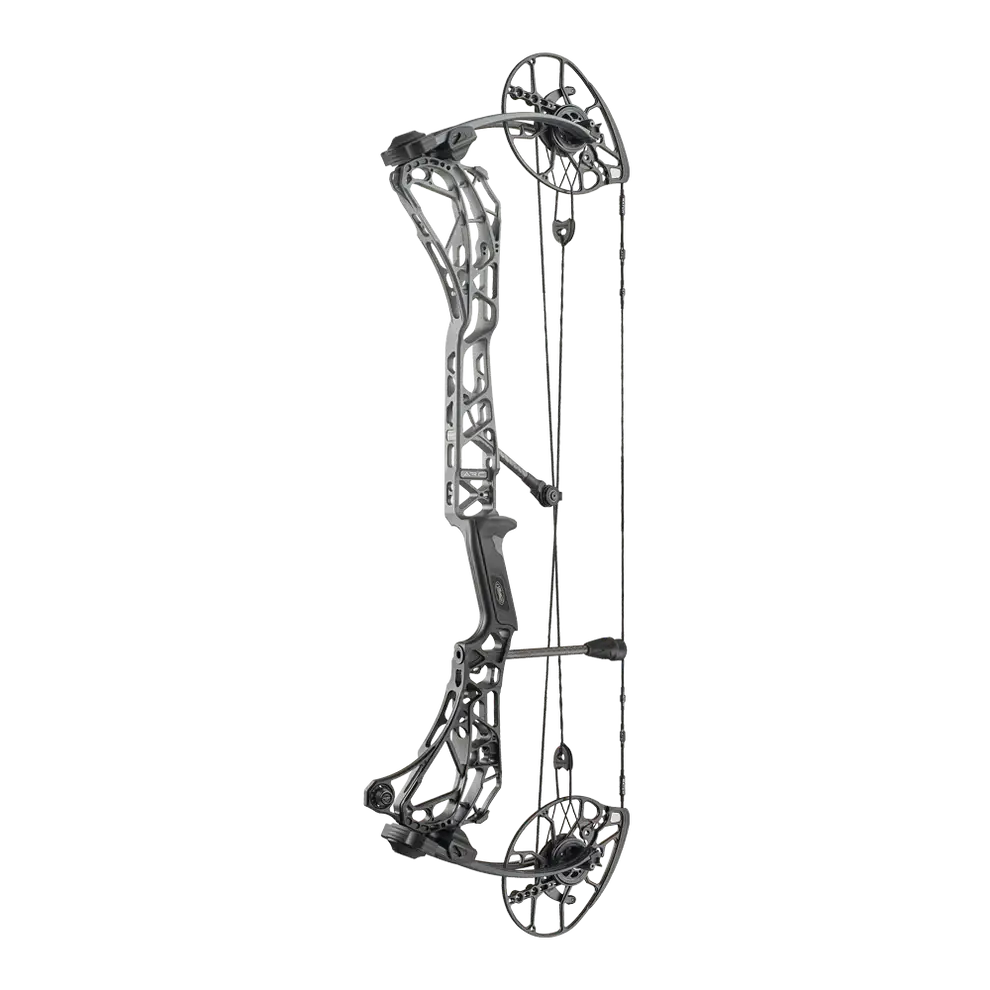
Axle-to-axle (ATA) is the length of the bow from cam to cam. Shorter bows (28–31 in) are maneuverable and great from a treestand or blind; longer bows (32–34 in) are more forgiving and steadier for target work and open-country hunting. Brace height — the distance from the string to the grip at rest — affects forgiveness and speed: a taller brace height (6.5 in+) is more beginner-friendly, while a shorter one squeezes out extra arrow speed for experienced shooters.
4. New vs. used
A quality used bow in good condition can be an excellent value, especially for a first setup — just make sure the limbs are crack-free, the strings aren’t frayed, and the draw length suits you. If you’d rather not gamble, a new bow gives you the full adjustment range and manufacturer backing. We carry both: browse new compound bows or save on inspected pre-owned bows.
5. The accessories you’ll actually need
A bare bow isn’t ready to shoot. Budget for a few essentials: a bow sight, an arrow rest, a release aid, a quiver, a stabilizer, and of course arrows cut to your draw length. Hunters will also want broadheads.
6. Buying and shipping
We ship archery gear worldwide — to the USA, Canada, the UK, Europe and Australia — and every bow can be set up and tuned before it goes out. If you’re unsure which model fits your draw length and shooting style, reach out and we’ll point you to the right one.
Ready to choose? Start with our full range of compound bows for sale.